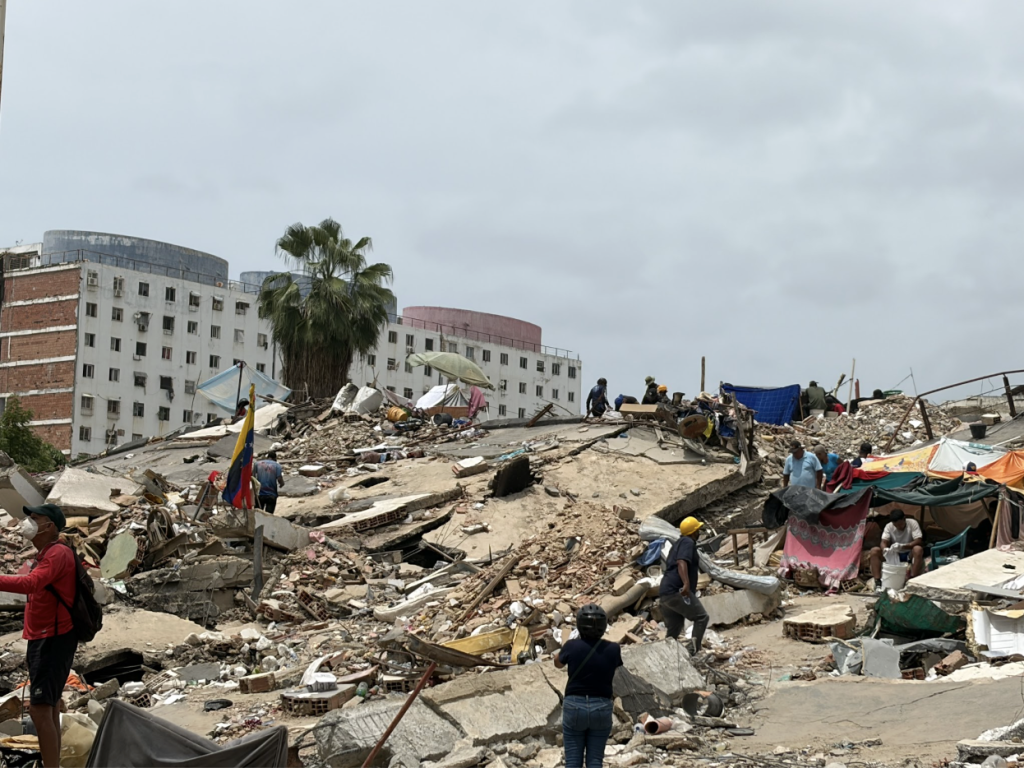
On June 24th, twin earthquakes of 7.2 and 7.5 magnitude (Mw) struck Venezuela. The earthquakes themselves were a natural tragedy, the scale of their devastation was manmade—the devastating failure of a state that was entirely unprepared.
The first 72 hours after a disaster are the most crucial. The clock was ticking, and the Venezuelan government had yet to step in. Vital equipment did not reach La Guaira in time. No plan or response protocol was prepared. In the immediate aftermath, hundreds of buildings in La Guaria collapsed within seconds.Victims were forced to dig their own families out of the rubble, many of whom were found deceased, and others were never found at all. Volunteers spent days and nights digging with rusty pickaxes, in the hopes of finding anyone who was still alive. Five days in, videos began circulating of officials standing by, armed yet idle, while families begged for help. Reports from the scene describe that police and military officials were eventually surrounding the worst-hit areas but were not in the rubble. Not where they were truly needed.
On The Ground
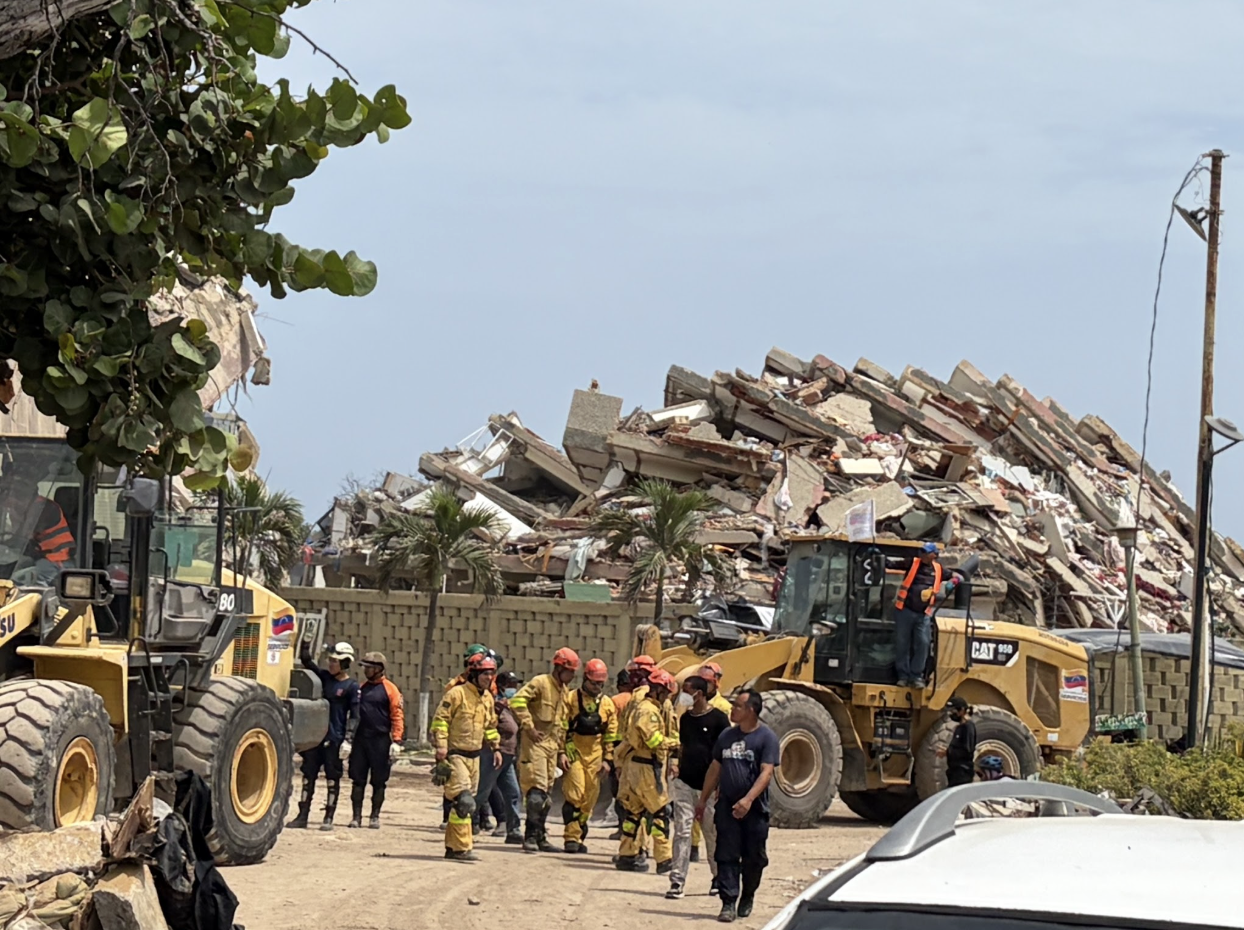
I saw the aftermath for myself. I was in Venezuela when the earthquakes hit and volunteered to bring supplies to La Guaira. What I saw didn’t match the story as-advertised.
I saw bodies left under rubble for days because nobody had come to collect them, their families and neighbors sitting merely meters away. There was no one to call and no machinery to dig them out. Families sat with their half-buried dead and waited for a state that arrived much too late.
Vultures crowded above particularly death-filled zones, attracted by the smell. Below, people, many of them survivors themselves, dug with what they could. Many had no gloves, no masks, no protective gear, and barely a pickaxe in hand. Still, they dug.
I heard the stories from the locals. I heard the desperation, pain, and the numbness in their voices as they listed the names of their missing loved ones. I met a family in a hospital who had lost everything, surviving only because their upstairs neighbors dug them out. Still badly injured, they went back to La Guaira to search for missing family members and salvage what was left of their home before it was eventually looted. They lived in the Urbanismo Hugo Chavez, a neighborhood that no longer exists.
In Caraballeda, a town in La Guaira, I met a little girl waiting outside the rubble that she once called home—where her sister had been trapped for a week. She was excited yet numb after receiving a donated hygiene kit with a Barbie doll. She had lost everything else. Her sister would likely never be found. That same day, I met a woman who will never be able to bury her sister. Despite having been properly identified after being dug out, officials had lost her body.
I worked alongside a man who spent every day coordinating aid efforts, still in the aftermath of losing his home and his unborn child. That same man, nearly three decades earlier, had lost 24 family members in the tragic landslide of 1999.
Eventually, I saw Venezuelan officials too. Most were mounted on motorcycles with a gun in hand, or controlling traffic from the ground. A few were even arrested for looting the homes of the victims. I did not, however, see nearly as many Venezuelan rescue officials deploying relief efforts as the state claimed. Instead, I saw international rescue and humanitarian aid teams, such as Mexico’s Los Topos and their Brazilian counterpart coordinated by the Brazilian Cooperation Agency of the Ministry of Foreign Affairs, as well as organizations distributing food, medicine, and supplies. According to an OCHA situation report, by July 14 2026, eighty-two international contributions had arrived from thirty-six donor countries, organizations, and entities. Still, the largest force I saw on the ground was the Venezuelan people: victims and volunteers from throughout the nation who were out digging, bringing supplies, and coordinating relief efforts to save their own. The people, the people, the people.
The Real Heroes
Residents of nearby cities, most of which had suffered their own tragic damage, drove en masse to La Guaira with whatever they could bring to help. After two days, the main highway connecting Caracas and La Guaira had become a supply line, and schools and businesses across the country became donation drop-off centers.
Reuters cites civilian volunteers as the backbone of initial rescue efforts—a claim acting President Delcy Rodriguez disputes, insisting that thousands of officials were deployed within the first day. Even if this were true—and most witness testimony suggests otherwise—deployment is still not the same as rescue. Most officials I saw sat atop motorcycles and directed traffic; they were not digging to help the victims. As one rescuer whose family was trapped in the rubble told Reuters, “We told [the government] two days ago that there are survivors, that they are knocking, and nothing. They don’t help anyone.” The government may have eventually sent thousands of officials. What they didn’t send was help.
The casualties continue to rise. To date, there has been an estimate of 6,500 dead, 60,700 homes affected, over 41,000 missing-person reports logged by citizen initiatives, and—according to the United Nations Office for Disaster Risk Reduction—an estimate of $37 billion in direct damages to housing and infrastructure.
More Than Magnitude
None of that—the death toll, the damages—is explained by magnitude alone. On June 8, a 7.8 magnitude (Mw) earthquake struck the Philippines. The Philippine government reported a total of 81 people dead, 1,315 injured, and roughly ₱1.36 billion (over $22 million) in damages to infrastructure. The country had protocols already in-place. Every province, city, and municipality had a disaster office that ran an early warning system, prepared emergency response teams, and held regular drills. Like Venezuela, the Philippines is a lower-middle-income country, but still has a functioning national response plan for earthquakes and tsunamis. The Philippines is frequently susceptible to earthquakes because it lies atop the notorious Pacific Ring of Fire, a geologically active zone that holds roughly 90% of all earthquakes on Earth. Therefore, it is consistently more prepared and even anticipates this type of disaster with robust response protocols.
Geology was never in La Guaira’s favor. The terrain has long been known to amplify seismic damage, yet geology doesn’t explain why civilians spent days digging their families out of rubble with pickaxes while the state was yet to adequately step in. Nor does the infrequency of the events excuse complete unpreparedness. Some countries naturally have more effective protocols than others, but the state is expected to have some sort of response prepared.
Still, earthquakes are inevitable in areas like this. Around 80% of Venezuela’s population lives in areas of high seismic hazard. Yet unlike the Philippines, which sits on the most seismically active region in the world, devastatingly strong earthquakes are rare in Venezuela: only five have reached a magnitude 7.0 or higher since 1900.
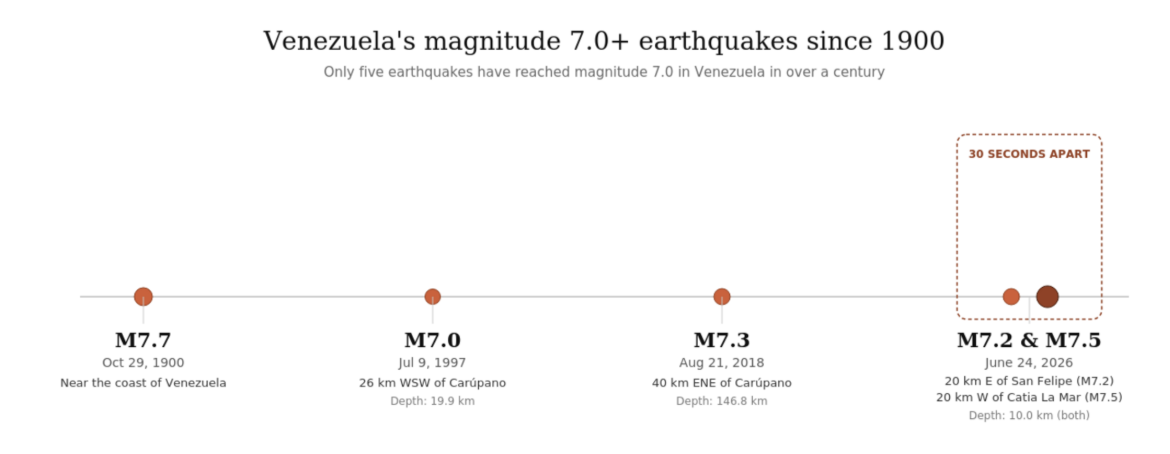
The Venezuelan government did, however, know that La Guaira would pay dearly for any disaster when the time came. Being unprepared and ignoring repeated warnings are not the same thing. Venezuela was warned, year after year, for decades.
Far before the current regime, the Venezuelan government had long known that La Guaira is susceptible to natural tragedies. They knew the terrain sat atop fragile soil; they knew construction there needed to be careful; they knew having one highway would block aid in the case of disaster; and they knew Venezuela was susceptible to earthquakes. As such, the Venezuelan government is not responsible for the existence of the earthquakes, but it certainly is responsible for the severity of their impact.
Ignored Warnings
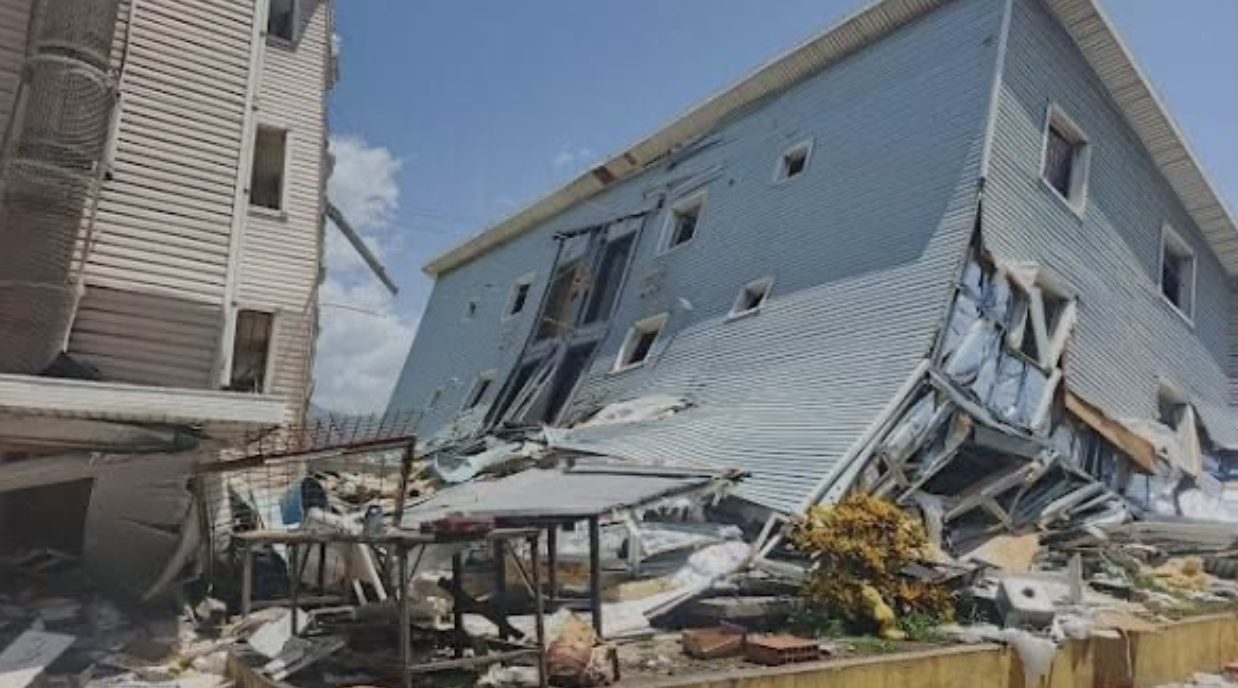
In 1947, a team of PhD students at Princeton University conducted the first systematic mapping of Venezuela’s coastal area, including La Guaira. After, geological studies were continuously developed, eventually finding that the terrain has a consistent pattern of alluvial fans—geologically well-documented hazard zones of eroded sediment formed at the base of mountains. In La Guaira, the densest urban development sat directly atop them. The city was built on extremely weak mountain debris that had accumulated over thousands, or millions, of years.
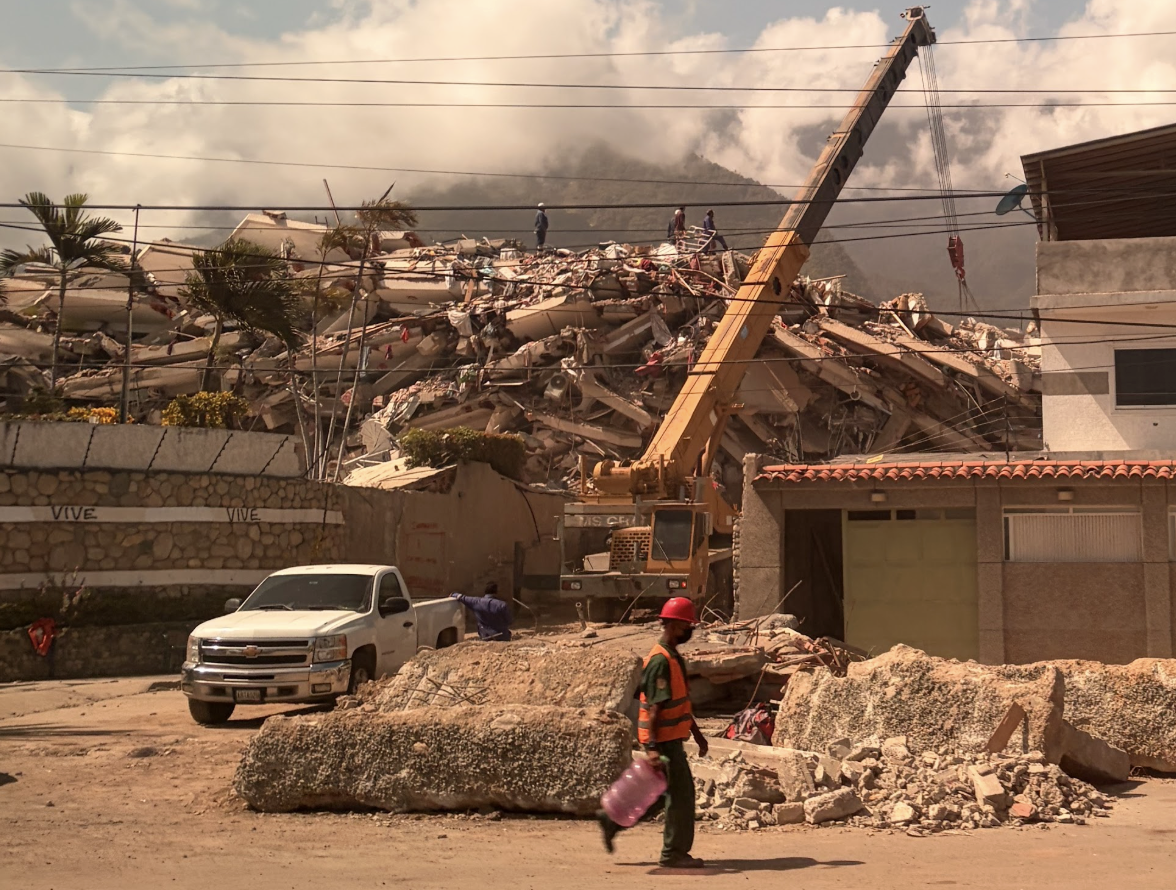
Architects and engineers—including the multidisciplinary technical team formed by the Colegio de Ingenieros de Venezuela and the Colegio de Arquitectos de Venezuela after the 1999 landslide—have also consistently noted that the heavy reliance on the singular Caracas to La Guaira highway would cut off emergency services, were any catastrophe to happen on the coast. When it did in 2026, that point of failure held. Every effort to provide aid, official or civilian, had only one road—only one way to reach the city. It quickly became a parking lot, with aid efforts arriving in devastatingly staggered waves.
Still, once the highway opened coastal access in 1953, La Guaira boomed. Resorts and vacation homes were mass-constructed, and by 1968 the national airport expanded, cementing the region’s future as a site of mass development—atop terrain geologists had already flagged as hazardous. In 1999, a tragic series of mudslides and flash floods buried the state of Vargas—now known as La Guaira—killing well over 15,000 and displacing 140,000.
Even Hugo Chavez, Venezuela’s newly-elected president—who would later be responsible for the beginning of the country’s complete socioeconomic collapse—managed a comprehensive response, with his power still unstable and the people who’d just elected him watching. He deployed 12,000 troops in air and sea operations, credited for bringing over 110,000 people to safety. Nearly three decades later, the current government, armed with knowledge and resources, could not manage.
Like many presidents before him, Chavez, too, was warned about the terrain’s susceptibility to disasters similar to the one in 1999. In 2005, a study from the Japan International Cooperation Agency explicitly reported that the coast, including La Guaira, was seismically hazardous and at risk of sediment disasters.
Six years later, the same instinct that sent troops to Vargas—securing power through the appearance of care, not the substance of it—led Chavez to launch Misión Vivienda, a project meant to address the displacement crisis that had followed the Tragedy of 1999 and a second mass flooding in 2010. He mass-built poorly constructed homes and urban communities, knowing development was happening on that same fragile soil.
Watchdog groups, such as Transparencia Venezuela, later documented that the government did no risk studies or terrain evaluations before building many of these neighborhoods. Professionals, such as Richard Casanova, director of Venezuela’s College of Engineers, assured that buildings in La Guaira can be safe if they follow strict codes. But Misión Vivienda developed plans quickly, with cheaply constructed buildings, and without adequately enforcing codes and inspections. As a result, many of the buildings and neighborhoods in La Guaira are now wiped out, with many being victims of both the Tragedy of Vargas in 1999 and the 2026 earthquakes.
Weakened institutions do not just repel competent people—they also reward those who look to exploit public tragedy for personal gain. This is how a power-hungry government creates low-quality buildings through Misión Vivienda on the same faulty soil geologists had been flagging for years. It is also how civil society has been assigned, for decades, a role the state should never have abandoned. The negligence has left an obvious paper trail and an unimaginable tragedy.
A Trail of Neglect
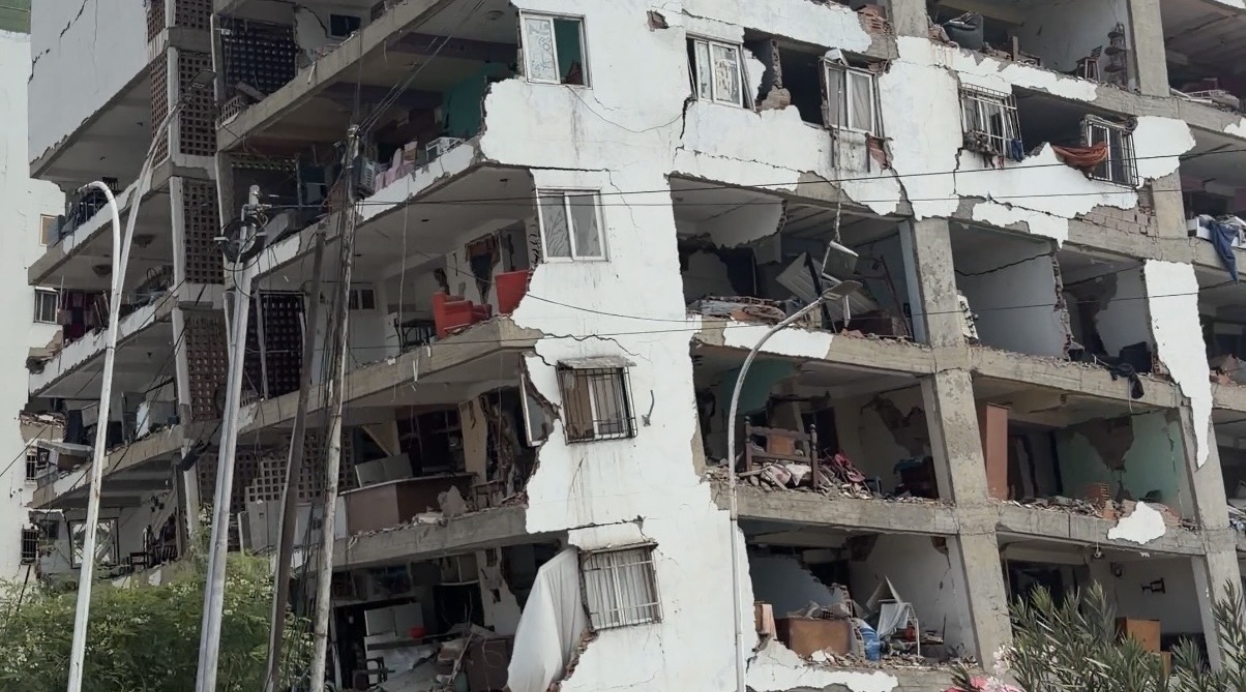
The state’s pattern of negligence didn’t end with buildings on bad soil; it continuously found new forms. The earthquake was not the first time civil society was forced to cover for the state. In 2016, following the dangerous scarcity of medicine and food, ordinary citizens pocket-funded the little aid that did arrive while the Venezuelan government refused foreign assistance. In 2019, as the crisis worsened and 7 million people were in need of humanitarian aid, the Venezuelan government outright rejected help from the US. They cast it as an attempt at invasion and humiliation, stating “we are not beggars,” leaving trucks with food and medicine staggered at the Colombian border for weeks. Volunteers in Cúcuta packed supplies by hand anyway, determined to get the aid through.
From Hugo Chavez to Nicolas Maduro to the current head, Delcy Rodriguez, the names have changed, yet the system that enables a nation’s destruction hasn’t. After decades of mismanagement, the Venezuelan government’s failures of preparedness, failures of foresight, and extreme negligence boiled over. On June 24, 2026, La Guaira collapsed.
The earthquake was never the whole story—the state was.
A state with no plan, no equipment, no protocol, and no care for the people, then and now. Civilians with makeshift pickaxes can never substitute for government troops with adequate equipment and response times; it has been the price paid by the people for the negligence of their government. But civil society taking on the role of victim and rescuer at the same time isn’t a solution, it’s a disgrace. As long as the Venezuelan government continues to deflect its responsibilities as a state, natural tragedies will continue to bring a far greater cost than necessary.