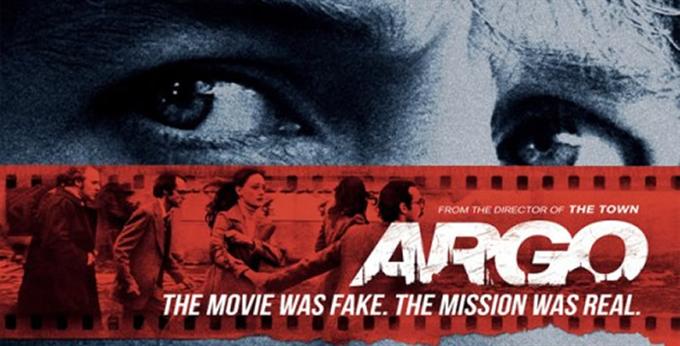
Argo, a film centered around the Iranian Hostage Crisis and inspired by a true story, premiered this past month. The plot focuses on the CIA’s attempt to exfiltrate six US Foreign Service workers who managed to sneak out of the American Embassy as Iranian students stormed the building and started President Carter’s worst nightmare. Although these six Americans may seem overshadowed by the fifty-two who were being held hostage within the embassy, the murder of any American on Iranian soil could have been enough to escalate a situation already verging on disastrous. A lot was at stake and the film depicted everyone involved as being well aware of that fact.
Argo begins with a condensed overview of the history of US-Iranian relations. It addresses the CIA’s coup to overthrow the progressive and democratically-elected Mohammad Mosaddegh. Mosaddegh fell out of US and British favor because he wanted to nationalize Iranian oil, which had previously been under British control. The film explained how the CIA had propped up the Pahlavi dynasty or the Shah, who effectively ended the Iranian era of democracy and social progress. The US continued to support the Shah, even as his tyrannical rule imposed Western trends and values on the people and brutally suppressed political dissent. The film, thankfully, does not ignore some US mistakes that led to the hostage crisis and tense relations with Iran.
But where is the film’s place in a country that wants those mistakes ignored? Mitt Romney refers to Obama’s “shameful refusal to support dissidents in 2009” in Iran, as if there is no history of American intervention in Iran that had gone horribly wrong. The scariest part is that Romney is not alone in this thinking–not by a long shot. Many Americans nod their heads when Romney describes the military option for dealing with Iran as “very real and very credible.”
American perspectives on relations with Iran are further complicated by speculations over Iran’s nuclear program. President Obama describes Iran obtaining a nuclear weapon as “a red line”, but has not specified other thresholds that would result in the United States taking more serious action against Iran, even as Israel pressures the U.S. to do so. If Iran makes a few more leaps toward a nuclear weapon, the US would have to contemplate a serious military engagement.
Luckily for Argo, it is not called to answer these tough questions. It toes the line between blatant Hollywood exaggeration and 1980s mystique, only erring on the side of entertainment. However, films about Iran are few and far between in America, and given that relations with Iran have only become more complex since the hostages’ release, one must consider the effect this film will have on American attitudes.
Even though Argo acknowledges American crimes against Iran, the bulk of the film still depicts the Americans and the CIA as heroes who are forced to enter a country that is barely civilized at best. Ben Affleck’s shaggy hair and wide collars are an obvious throwback, but the film’s depiction of Iranians is not so obviously outdated to the American eye. In fact, it may not even be an outdated American style at all.
International Affairs ’15