The ongoing civil war in Sudan is one of the deadliest conflicts that the world has seen in recent years. It is one of the deadliest conflicts happening in the entire world. and yet the international community is choosing to look the other way because they do not care enough about African nations, and because they do not wish to conflict with the UAE.
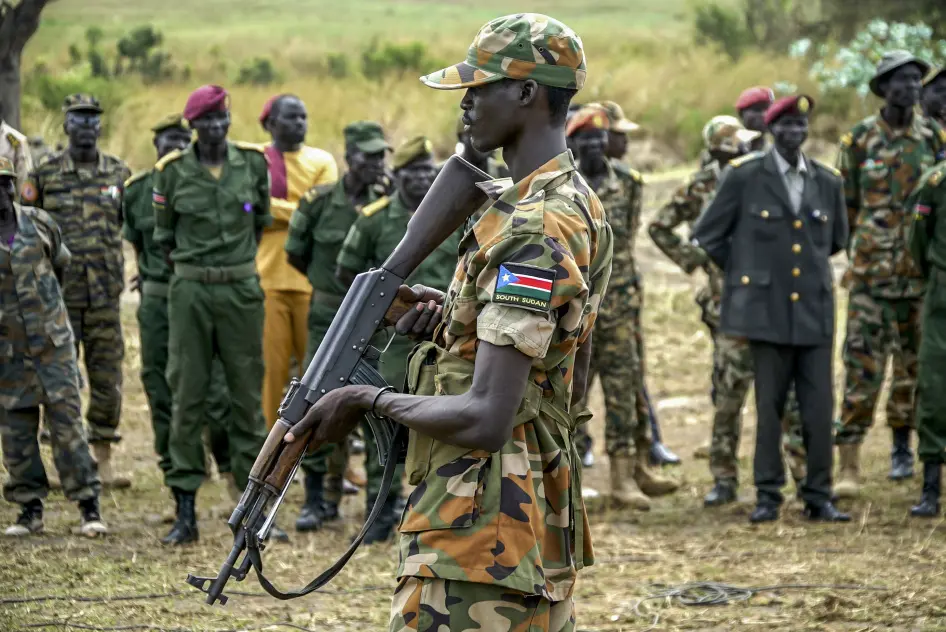
The two groups fighting are the Rapid Support Forces (RSF) and the Sudanese Armed Forces (SAF), both wanting to have full control of Sudan. The RSF is a paramilitary group, fighting to gain control of the country. Conversely, the SAF is the government-backed military of Sudan, fighting to retain power. Even though this conflict began relatively recently, there is much context leading up to why it started.
How Did the Conflict Begin?
In 2019, there were country wide protests, millions of Sudanese citizens against the then President Omar al-Bashir and his authoritarian regime. This led to a new government, with both civilians and military leaders coming into power. The goal was to rid the government of al-Bashir and his nearly three decade long rule, theoretically allowing civilians to dictate how they wanted their government to function. However, just as the Sudanese people began to take steps toward democracy the country faced a swift and unfortunately successful military coup.
The leaders of this coup were General Mohamed Hamdan Dagalo (better known as Hemedti) and General Abdel Fattal al-Burhan. Hemedti was the leader of the Janjaweed militia, an Arab militia accused of committing ethic cleansing and genocide against non-Arab communities. Over several years they uprooted and destroyed hundreds of villages and ended up killing approximately 300,000 people, most of which were part of non-Arab tribes. General al-Burhan, on the other hand, was a soldier in the Sudanese officer corps for many years. He rose quickly, as he notably had a talent for battle strategy.
The two generals eventually joined forces to overthrow al-Bashir in 2019. They first came together in 2003 to fight Darfuri rebels in the Western part of Sudan. They worked well together and reunited when they both supported the revolution. It was in 2021 that things began to fall apart. General al-Burhan began reinstating loyalists from the al-Bashir period to their government positions, which Hemedti did not approve of. They both had large leadership roles in this new government, but disagreed on key policy decisions. Hemedti wanted to leave the regime in the past, and felt that these loyalists reinstated by al-Burhan would aim to bring it back. This elevated tensions between the ethnic groups in the country, specifically Arab and non-Arab populations. Multiple violent skirmishes between the groups made relations between them worse than they had been in the past. Hemedti also advocated for establishing a democracy, which was frowned upon by other government officials who wanted more long term control. By this point, Sudan was in complete chaos due to the combination of political turmoil and ethnic conflict.
All of this eventually led to the start of the current conflict. Hemediti leads the RSF and al-Burhan is head of the SAF. It is often debated who fired first. Neither side will take accountability, and instead blame the other. That being said, both SAF and RSF soldiers were deployed in Sudan by early April. Large explosions occurred in Khartoum on April 15, 2023, and both sides accused the other of setting them off. This day marked the official beginning of the war.
What is Happening Now?
Currently, the conflict rages on. It has displaced over 12 million people so far, and that number is constantly rising as the fight continues. This war has been particularly difficult for women and girls who are especially vulnerable in Sudan, as it is even harder for them to access food, water, and basic healthcare. There has also been a dramatic spike in sexual violence, a tool specifically being used by soldiers as a war tactic to terrorize communities into submission. People have been attempting to escape these conditions, with thousands of citizens fleeing south to the large displacement camp in Tawila. Unfortunately, even though many attempt the journey, less than half of them successfully do so. It is an almost 40 mile journey that most complete on foot without food or shelter along the way. Several people have died of dehydration, hunger, or exhaustion trying to make it to the camp.
The International Rescue Committee (IRC) has placed Sudan on its emergency watchlist since 2023, due to the fact that this conflict has left over 30 million Sudanese citizens in need of humanitarian aid. Though this aid is desperately needed, it has been challenging to provide due to attacks on international aid workers in the country. Both the SAF and the RSF have attacked aid workers in order to prevent help from arriving. Hospitals where many Doctors Without Borders have been sent to work have been targeted and hit by drones. Their trucks of supplies have also been stolen or destroyed. Based on these statistics, Sudan is now considered the fastest and most severe displacement happening in the world at the moment. Despite the constant unrest and struggle facing the Sudanese people, they have received almost no attention from Western media.
Foreign Involvement
The Sudanese civil war is a power struggle between the SAF and RSF. As the national army, the SAF has country funds and alliances. While this may seem advantageous, Sudan is a very poor country, and has comparatively much less resources and funding. However, they are aligned with Egypt, which is their main financial backer. Egypt has agreed to fund the SAF because the group has agreed to protect Egypt’s trade routes in the Red Sea and the Nile River. They have provided military equipment, training, and even medical treatment to the SAF.
Even though the country has never confirmed it, there is significant evidence that the United Arab Emirates (UAE) is giving money and weapons to the RSF. United States intel has found that the UAE has interests in prolonging the war for resources and monetary gain. If the UAE is giving money to the RSF, that gives them a huge advantage due to the fact that the UAE is one of the wealthiest nations in the world, much richer than Sudan and Egypt combined.
Since the conflict began, Emirati money, passports, and even bombs have been confiscated from the RSF during raids in Sudan. The United States Department of State has been investigating this connection, and it has found 23 affected flights from the UAE to Sudan between June 2023 and May 2024. The department claimed with almost certainty that these flights were bringing arms and supplies from the UAE to the RSF. They predict that it is likely because the planes used were military grade, often used to carry heavy supplies to armies around the world. The same kind of plane has delivered supplies to Israel and Bahrain in the past. Even in Congress, Senator Chris Van Hollen (D-MD), Representative Rashida Tlaib (D-MI-12), and Representative Gregory Meeks (D-NY-5) have all called for a pause in weapon sales from the United States to the UAE, as an attempt to slow the weapons being funneled into the RSF.
There are several reasons why the UAE would have vested interest in this war. First, the Emirati government wants to gain access to Sudan’s abundant natural resources such as precious metals and unique crops. The Sudanese government has turned down several proposals from the UAE asking to extract these materials. This is a main reason why the UAE opposes the SAF and current government in Sudan. The hope for them is that with the RSF in power, they could take their desired resources from Sudan. They also have a special interest in the Red Sea, of which Sudan controls 500 miles. They need access to this because all of the UAE oil exports must pass through it, and these oil exports make up a significant part of their economy. Some also speculate there may also be an ethnic component to this military backing. The RSF has been accused of ethnic cleansing in the past, and is being accused of it during this conflict as well. As a mostly Arab militia, it is possible this is a reason why the UAE would support them. That being said, it is important to note that the United States has not taken an official stance on the war. Under the Biden administration, sanctions were imposed on both the RSF and SAF because both were accused of committing war crimes.
Where is the International Community?
Despite the abundance of tragedy and humanitarian need in Sudan, it seems that the international community, such as influential countries and organizations, are nowhere to be found. The world rallied behind Ukraine, and then again behind Palestine. Will Sudan ever receive the same attention? At this point, it seems unlikely. This war has been ongoing for over two years with very little media attention or public outcry. Even though it may seem insignificant, the attention brought to international crises such as this one can bring money, supplies and real help to the millions of people in need.
The reality is that Sudan is a very poor country in Sub-Saharan Africa. Many people feel that this region of the world is always plagued with turmoil, and as such does not deserve more attention and help. It is also important to note that those struggling in Sudan are potentially receiving less attention because of the color of their skin, and it seems even in war, those with fairer skin are awarded much more consideration. But the reality is that people in Sudan need aid, and international attention would provide this.