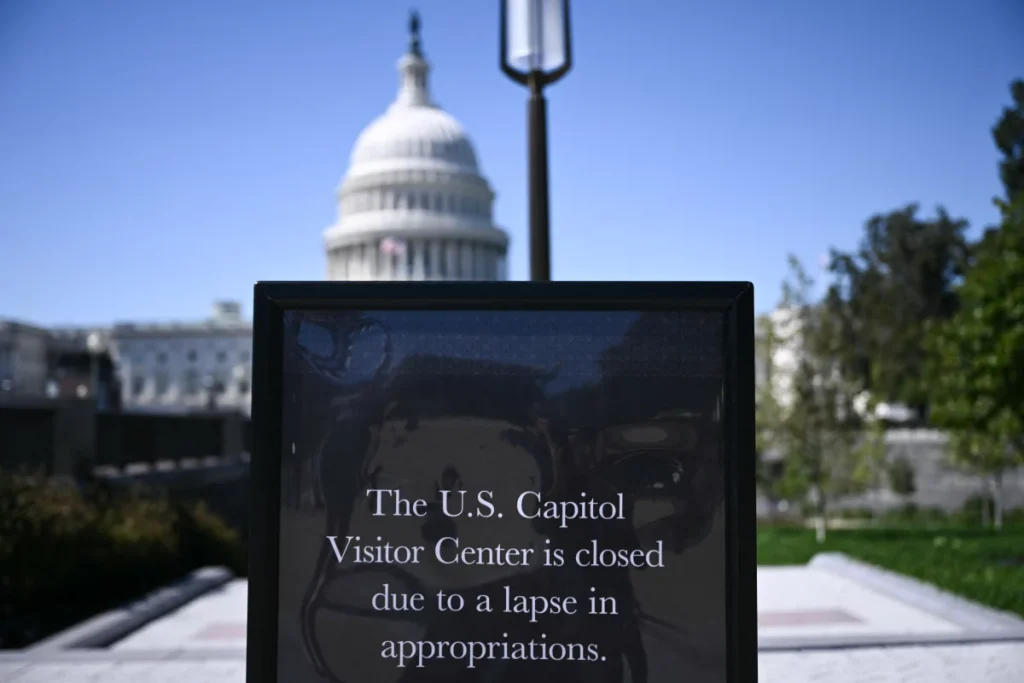
While many question the logic and onset of the 2025 government shutdown, philosopher John Rawls would view it as predictable, far from an anomaly, a direct consequence of the breakdown in political trust and long-term erosion of public reason. It was not accidental. As Rawls posits in his conceptualization of public reason for liberal democracies, political power must be used in a way that is mutually respectful and consistent with equal citizenship for all. The shutdown was not a surprise.
Power must be exercised to establish and maintain legitimacy between the government and its ‘rational constituents,’ posited by Rawls as those who are capable of reasoning and sensibility. Political power is only legitimate when there is sincere belief in the reasoning behind policies.
After Congress failed to pass a Republican-supported funding resolution aimed at ending major health care subsidies, Democrats, lacking the leverage to intervene, withheld their support. The shutdown was used as a strategic effort to alert the American public of the impending termination of health care subsidies, which would have decreased the affordability of coverage for millions.
The shutdown revealed the inherent fragility of American democracy and the political system’s inability to fully uphold Rawls’ concept of public reason—a failure that he would likely have seen as inevitable rather than surprising.
Institutions that allow political actors to leverage these critical services infringe upon the basic foundations of fairness and democracy. Instead, federal services stopped operations, millions of Americans faced uncertainty regarding their coverage, and both parties blamed the other. Essential services, including the Supplemental Nutrition Assistance Program (SNAP) were disrupted, airports faced bottlenecks, and households waited for paychecks that never came. Congress ultimately failed to reach a resolution that people could reasonably accept.
From a Rawlsian perspective, this situation forces us to see beyond partisan ideologies and examine the deeper instability that made the shutdown possible.
Abandoning shared justification, it was clear the Republicans needed little Democratic support in the vote to pass the Great Big Beautiful Bill, essentially dismissing bipartisan deliberation. Rawls’ concept of public reason would have further advocated for greater consensus and comprehensive deliberation across party lines, as legitimacy is ultimately derived from shared agreement, rather than partisan support.
The 43 day shutdown illustrates systemic problems in democratic deliberation that extend beyond partisanship. Rather than assigning partisan blame, attention should focus on the conditions that made a shutdown of this magnitude possible.
According to Rawls, liberal democracies depend on far more than the frameworks of elections and procedures; they demand transparency and effective dialogue. The notion of public reason does not rely on complete agreement, but rather, mutual understanding and respect.
Public reason does not necessarily guarantee that political power will be universally agreed upon or completely sound, but it aims to legitimize the use of political power by creating a foundation for public justification. Public reason ensures that power is morally exerted by considering all citizens as free and equal.
The 2025 shutdown demonstrated that this commitment has weakened significantly.
This weakness became more apparent in the political rhetoric regarding the shutdown. Contemporary politics rarely reward general justification. Instead, politicians craft narratives for ideological audiences, a tendency that is further reinforced by media coverage.
From a Rawlsian perspective, when political actors fail to offer sincere justification to all constituents, democracy becomes increasingly fragile. Policies are enacted to solidify the loyalty of supporters rather than to appeal to shared political values, and the shutdown amplified this vulnerability.
The problem goes deeper than the disagreement itself. It is the breakdown of political institutions and norms that once facilitated bilateral discussion. Politicians seek to get their argument across, rather than reach consensus. The citizenry becomes ignored rather than prioritized. Rawls foreshadows this collapse, as the breakdown of reciprocity and proper explanation cultivated an environment where these crises become normalized.
Therefore, the shutdown cannot be disregarded as an accident. It underscores a systemic issue, where American democracy fails to function on shared terms. Actors seek to reason with their specific followers, not the broader constituency. In turn, this decreases the legitimacy of the government and citizens’ faith in representation acting fairly. Polarization turns into a perpetual cycle, undermining mutual agreement and civic respect.
As justification decreases, political actors have less incentive to engage within disagreement, leading to these instances of gridlock and stagnation. This dynamic shifts the tenets of democracy itself, turning it away from discussion, and becoming entrenched within partisan ideals. Legitimacy becomes claimed through power rather than persuasion and reasoning.
Rawls’ argument transcends partisanship; it highlights the moral structure of democratic rule. A legitimate democracy expects justified policies that every citizen can deem permissible, even if disagreed upon. When public reason is broken, power becomes something to gain, rather than something to rationalize. Government becomes dysfunctional, and politicians lack incentive to restore the trust required for democratic stability.
The consequences of the 2025 shutdown demonstrate this reality. Conflicting accounts developed immediately, with Democrats viewing the shutdown as a moral crisis and Republicans framing the bill as delayed reform. Outside commentators minimized the situation to finger-pointing, overlooking the underlying dilemma: both sides were catering solely to their partisan supporters, rather than the greater country. Each party’s reasoning was focused on rallying their respective constituents, rather than persuading the whole.
Rawls would view this as a moral shortcoming, not just a party disagreement. The shutdown demonstrated the repercussions of forsaking reciprocity. When the citizenry loses faith in justified decision-making, the legitimacy and trust in political institutions crumbles. Public reason is lost and these political emergencies become indicative of democratic flaws.
The real takeaway of the 2025 shutdown is not to blame but to better understand that our current democratic structure often rewards the neglect of public reason and leaves little incentive to reinforce it. Rawls cautions against nostalgia or an idealized history. He is not asking the public to restore an imaginary, mythical past of perfect bipartisan compromise, as it has never existed. Rather, he encourages citizens to come to terms with how political discourse and rhetoric is able to discredit entire groups.
In preventing future shutdowns, American democracy requires more than just short-term compromise. The country needs leaders that are able to justify their policies in ways the general public can reasonably accept. Institutions and representatives need to promote the values of reciprocity and transparency, not further ideological divide. It demands the existence of a civic culture that views disagreements as inherent to democracy, not an excuse for its failure.
Public reason does not operate on perfection. It requires equality, fairness, and consistency. If we fail to reconstruct the norms and framework that sustain democracy, political emergencies, such as the 2025 government shutdown will only continue to plague American democracy. The question now is whether the country, through societal change and greater representation, can facilitate a solution before his warning becomes our future.