Long before he entered politics, Donald Trump made “You’re fired!” a national catchphrase on The Apprentice. That brash, unfiltered persona didn’t simply stay on the TV show; it became central to his political campaign and presidency.
From mocking journalist Catherine Lucey with “quiet, Piggy” to berating his opponents with racial or sexist insults, President Trump’s rhetoric redefined American political communication. Supporters praise his language as authentic—a politician finally speaking without filters. Yet, this perception of honesty masks reality: his rhetoric is offensive, strategic, and corrosive to civic norms.
By framing insults and brashness as authentic expression and an embodiment of free speech, Trump has normalized a mode of politics that undermines democratic expectations, deepens polarization, and prioritizes spectacle over substantive debate, while his supporters continue to defend him regardless.
Defining Political Profanity and Its Historical Roots
Political profanity extends beyond swearing. It includes language that publicly humiliates, dehumanizes, or delegitimizes, often targeting individuals based on race, gender, ability, nationality, or ideology.
For example, Trump’s November 2025 “quiet, Piggy” comment directed at Lucey reflects a long-standing pattern of gendered humiliation. The insult did not critique the reporter’s question or credibility; instead, it reduced her to an object of mockery, delegitimizing her professional authority in a male-dominated space. By cutting Lucey off mid-question, Trump signaled that a woman’s role in politics is conditional and precarious—women who challenge those in power, especially men, risk public belittlement and shame. Irrespective of their merit and professionalism, their appearance and demeanor are subject to attack.
Karoline Leavitt, White House Press Secretary, defended his comment, saying that reporters “should appreciate the frankness and the openness [they] get from President Trump.” She added that Trump is “the most transparent president in history.” This reframing reduces humiliation to mere “frankness” and conflates transparency with disrespect. Such rhetoric exemplifies an erosion of professionalism, particularly from an official expected to uphold the nation’s highest moral and ethical standards.
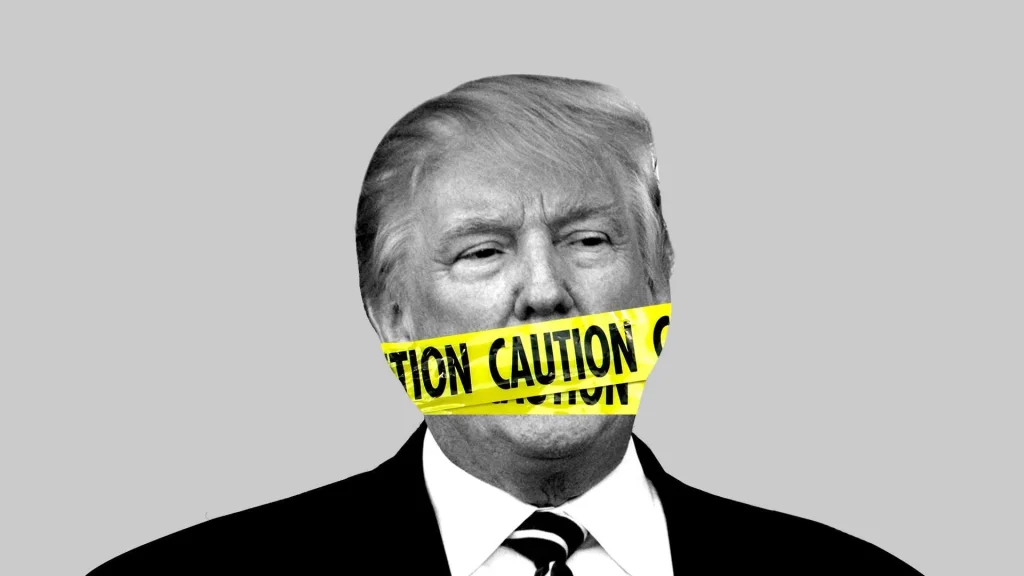
This incident is part of a broader pattern in which Trump seeks to silence journalists, framing outlets that challenge him as spreading “lies” and therefore poisoning public opinion. He has repeatedly targeted reporters and public figures who criticize him—Mary Bruce, Rachel Scott, Kaitlan Collins, and even comedians—using public ridicule to signal that dissent will not be tolerated. Humiliating journalists for asking legitimate questions treats criticism as a threat rather than an essential part of democratic discourse.
Central to Trump’s commentary on the media is his claim that major news outlets are not objective truth-tellers but instead purveyors of “fake news.” Notably, Trump does not extend this criticism to Fox News or other traditionally conservative outlets, suggesting that his concern is less with bias or sensationalism than with controlling the narrative regarding his presidency. Under the guise of casting out falsity, he undermines core journalistic principles and the democratic right to a free press. Consequently, public trust in the media erodes, weakening journalism’s role as a democratic safeguard and limiting its ability to hold those in power accountable.
However, the use of offensive language in American government is far from unprecedented. Recordings from Lyndon B. Johnson’s presidency revealed frequent profanity, yet these remarks were private and never intended for public consumption. When White House taping systems installed under Richard Nixon recorded his Oval Office conversations—many of which contained racial slurs and other offensive language—Nixon later expressed regret that the recordings exposed words Americans were unaccustomed to hearing from presidents. In his book In the Arena, he wrote that “millions were shocked.” Historically, presidential vulgarity remained largely concealed from the public, and its exposure appeared rare, transgressive, and unsettling.
Trump represents a break from this tradition. His insults are not accidental leaks or private comments; they are deliberate, public, and routine, broadcast in real time through rallies, interviews, and social media. This constant visibility conditions the public to accept mockery, racism, and verbal aggression as normal features of political leadership. What was once scandalous has become familiar.
Media Dynamics, Spectacle, and Echo Chambers
Trump’s rhetoric operates within a media environment that thrives on outrage. His offensive language is not incidental; it is a tool of spectacle. Statements such as referring to Haiti and African nations as “shithole countries” during a 2018 meeting, or publicly mocking a disabled reporter during the 2016 campaign, were widely condemned by his opponents, but they also dominated news cycles.
Cable news, online outlets, and social media platforms prioritize attention-grabbing content, and Trump’s words reliably generate clicks, shares, and viral clips. Algorithms reward engagement, elevating provocative content over nuance and rational conversation. Within pro-Trump online communities, his supporters often reframe his offensive remarks as “telling it like it is,” while criticism is dismissed as political correctness or elitism. These echo chambers reinforce ideas of group identity and weaken norms of accountability for political leaders, making it easier to excuse misogynistic, racialized, or demeaning language as justified or necessary.
At the center of Trump’s appeal is this illusion of authenticity. Authenticity has always been synonymous with integrity, consistency, and a respect for truth, but Trump has redefined it to justify repeated personal attacks on people of color, journalists, and political opponents.
Offensive speech transforms into political currency: the more outrageous the language, the stronger the loyalty it can generate. By rewarding such rhetoric, supporters help continue a cycle in which disrespect is not merely tolerated but celebrated and civility is reframed as weakness. The result is a political culture in which spectacle outperforms substance and insult becomes a primary mode of communication.
Consequences for Civic Norms and Democracy: Spectacle Over Substance
The danger lies not only in the language itself, but in how it is interpreted by the public. Trump’s supporters seem to equate his insults with honesty, mistake aggression for charisma, and view the use of profanity as a positive shift in political debate.
This language has tangible consequences for US diplomacy, as it undermines the perception of professionalism and respect in international relations. Other leaders may view such rhetoric as reflective of the values—or lack thereof—of American leadership, potentially straining alliances and weakening the US’s global standing.
For example, in January 2026, after Trump repeatedly suggested that US military force could be used against Mexican drug cartels—labeling them “enemy combatants” and implying the possibility of unilateral strikes—Mexican President Claudia Sheinbaum publicly dismissed the threat, stating, “It’s not going to happen.” Her response reflects how Trump’s often hyperbolic rhetoric has weakened the credibility of American leadership, leading foreign officials to interpret presidential threats as political theatre rather than serious policy commitments. Language that resonates with supporters as authenticity and strength simultaneously undermines US diplomatic authority.
The normalization of offensive rhetoric carries serious consequences for democratic life, including fueling threats against marginalized communities, spreading misinformation, and rewarding spectacle over reasoned debate. Respectful disagreement is a prerequisite for deliberation, compromise, and institutional trust. However, when political language centers on humiliation or derision, debate collapses into mudslinging, and people become reactive rather than reflective.
This language can translate into tangible harm, as seen during the 2024 Presidential Debate, when Trump repeated a decade-old, baseless stereotype in relation to Haitian immigrants in Springfield, Ohio: “They’re eating the dogs, the people that came in, they’re eating the cats.” Delivered on a national debate stage, the statement was both highly visible and widely circulated; its shock value translated into a surge in racist commentary, threats, and harassment directed at Haitian immigrants. The comment functioned as a tool of social exclusion, portraying immigrants as morally and culturally threatening, uncivilized, and perpetually foreign.
This rhetoric mirrors the language used against Chinese immigrants in the late nineteenth century, who were depicted as unhygienic, morally suspect, and incompatible with American society—narratives that helped justify the Chinese Exclusion Act, the nation’s first country-based immigration restriction. Such harmful wording legitimizes fear-based narratives that make discriminatory policies appear reasonable, even necessary, and lowers the threshold for public acceptance of both hate speech and exclusionary governance.
Similarly, during the height of the COVID-19 pandemic in 2020, Trump’s repeated use of the term “Chinese virus” coincided with a 76% increase in anti-Asian hate crimes, rising from 158 reported incidents in 2019 to 279 in 2020. The President’s statements hold weight in the public eye and therefore legitimize bias, sending a message that immigrants and people of color are less deserving of protection and safety under the law. The result is a social climate where hostility, discrimination, and even threats of violence become normalized and socially permissible.
Beyond politics, this rhetoric shapes social behavior. Insults framed as authentic reinforce stereotypes, heighten social hostility, and lower expectations for conduct. Over time, this results in heightened toleration of hate speech.
While freedom of expression is essential, political communication can be candid without resorting to humiliation or racism. Authenticity grounded in evidence, integrity, and respect strengthens democracy, while words rooted in insult, misinformation, and the defense of offensiveness undermines it, signaling civic decay. American political culture depends on leaders modeling civility. When provocativeness is defended as honesty, the result is not transparency but instead, a degradation of democracy itself.