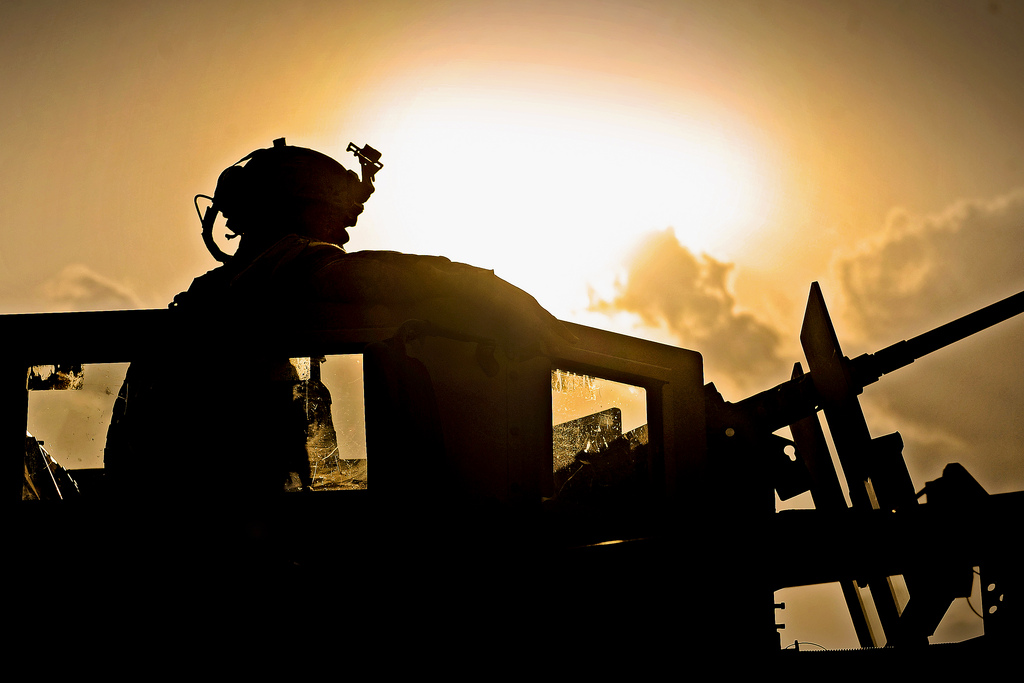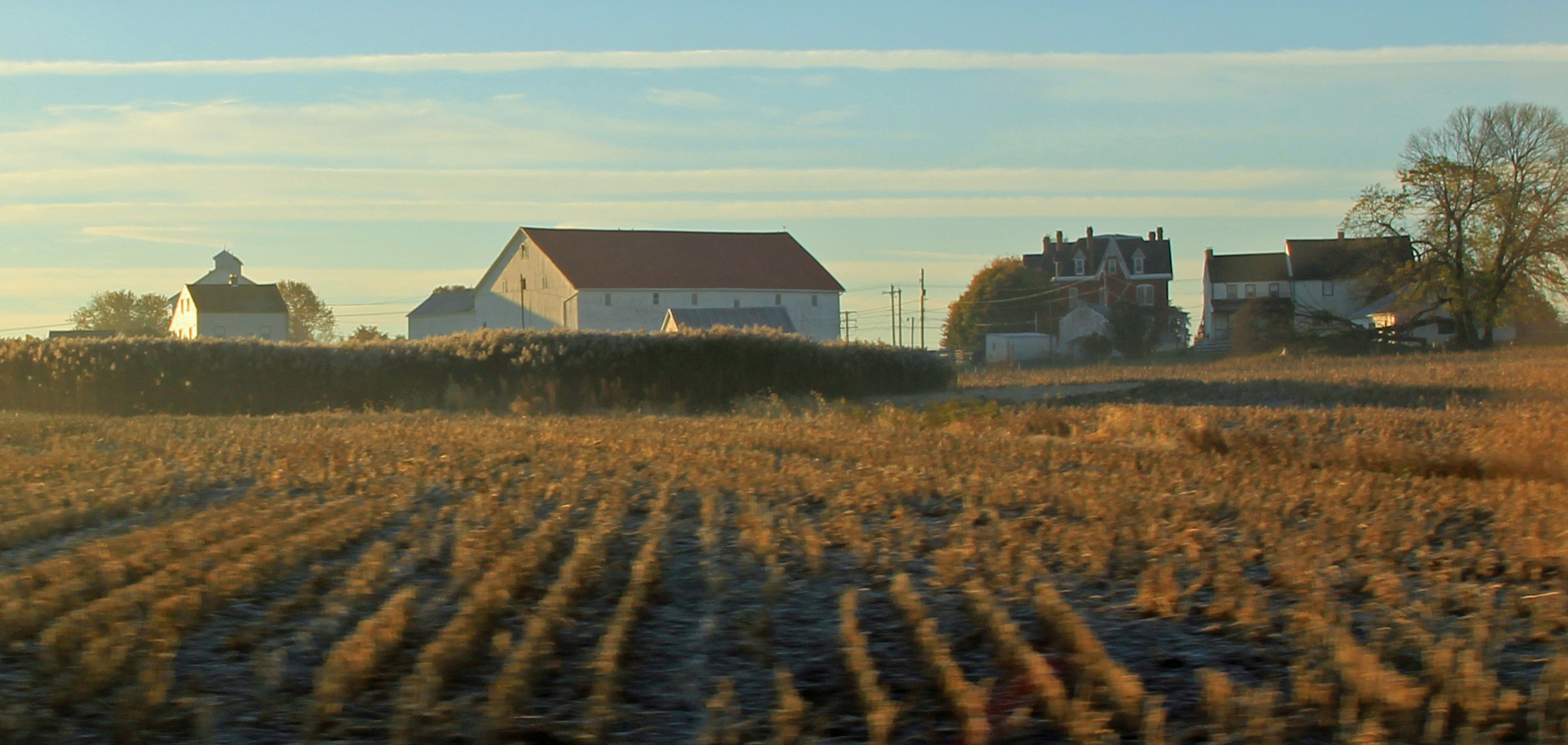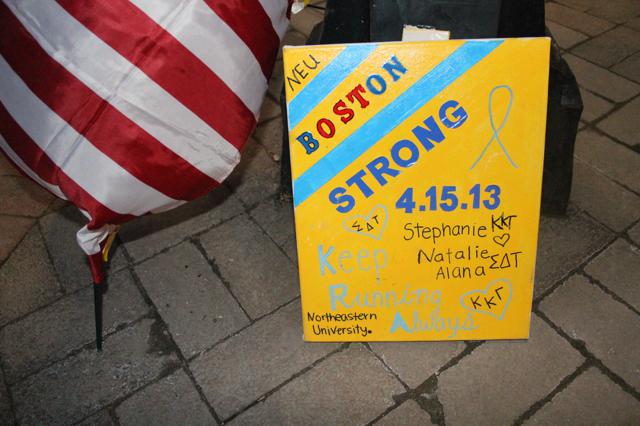
Judith Butler’s book Precarious Life was a subject of discussion in Prof. Bormann’s Contemporary Political Thought POLS 2332 class this past semester. This book puts human vulnerability and loss (the precariousness of life) at its center and Butler asks us, against the backdrop of 9/11, what – politically – might be made of our grief besides a cry for war. Butler proposes to make grief into a resource for politics; she critiques that without the capacity to mourn the loss of life – our lives and that of the Other – we lose a keener sense of life and suffering we need in order to oppose violence. To be mindful of one’s vulnerability, she proposes, can become the basis of claims for non-military political solutions. Click on each of the following images to read each student’s application of Judith Butler’s books to the events that took place on April 15th and the days following.
When your city is terrorized, how do you react? Judith Butler says that we ought not to react to violence with violence. We should take a different approach. Butler does not suggest that we ignore the perpetrator, or let him or her walk free. Instead, we ought to give the criminal a trial, and not launch an attack that could result in the deaths of innocents…
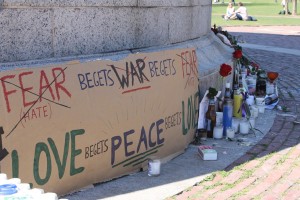
Prompted by the attacks of 9/11, Butler’s critique of the US response to fear and mourning is indeed contrary to the average American sentiment. While the official response to the attack on the World Trade Center was vehement censorship, militarization, and breaching of citizens’ rights in the name of security, Butler suggests something of an alternate world: “What would it mean, in the face of violence, to refuse to return it?”…
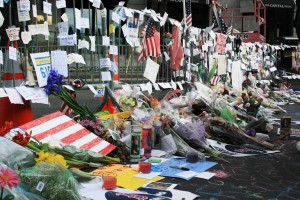
I wrote the outline for this essay on Monday, April 15th. It had been an especially good day: I had even won myself a coveted window seat on the third floor at Snell Library.
I was reading Judith Butler’s Precarious Life when I heard the news. I should have panicked. I should have been terrified. I should have been emotionally distraught over the bombing’s victims. But I had spent a few days inside Butler’s head, and I couldn’t pull away from our glaring vulnerability. There’s nothing I can do, I thought…