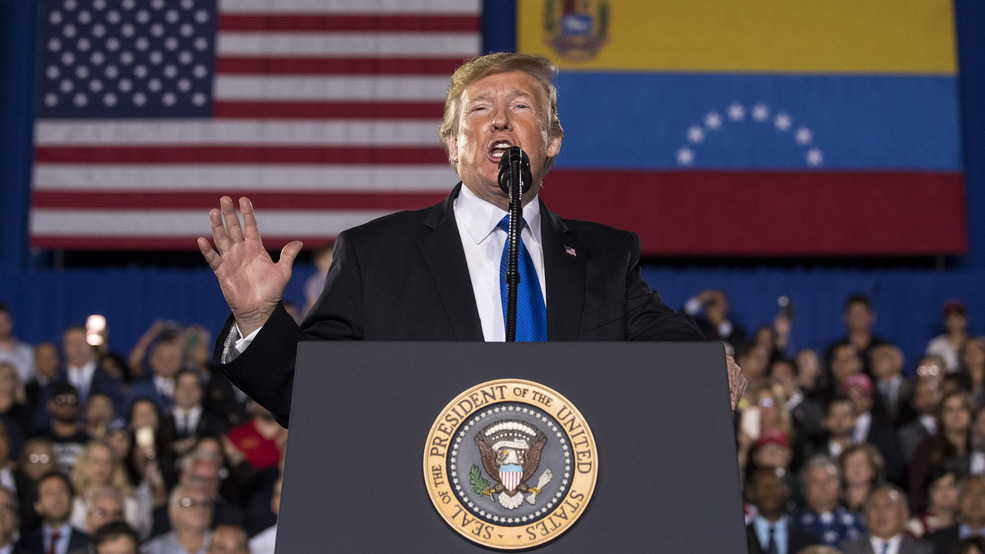
In recent months, United States President Donald Trump has intensified American focus on Venezuela. In early September, a US Special Operations aircraft attacked a small speedboat in the Caribbean, promptly exploding the boat, its cargo, and the eleven individuals onboard. Justification for the strike was tied to the boat’s alleged association with the Venezuelan Tren de Aragua Cartel. After this unprecedented attack, aggression has only continued, with the United States military enacting twenty two strikes on boats accused of drug trafficking that have killed eighty seven civilians in total from the first strike in September to December 13, 2025.
American military forces have additionally begun seizing tankers in the Caribbean transporting oil for Petróleos de Venezuela, the state-owned oil company of Venezuela. These seizures are tied to a warrant issued on the basis of the ships’ previous actions smuggling Iranian oil through an underground black market ring of petroleum vessels, an issue ongoing since 2023.
Ultimately, on January 3, 2026, the tensions created by American actions in Venezuela culminated in a strike operation successfully executed by the US Army’s Delta Force and CIA operatives to capture Venezuelan President Nicolás Maduro and bring him to trial in New York. Maduro pleaded not guilty to drug, weapons, and narco-terrorism charges.
As US activity in Venezuela continues, the question of intent abroad remains. The Trump administration’s intervention in Venezuela provides the United States with opportunities to propagate American democratic ideals abroad, extend US access to Venezuela’s immense mineral and oil wealth, and expand the political power of President Trump in the domestic sphere. Consequently, US strategic objectives rest on a combination of these ideological, economic, and political factors.
The US has historically fostered a sour relationship with the nation of Venezuela, mostly as the result of fundamental ideological differences between the countries’ leaders. After the election of former President Hugo Chavez, Venezuela saw a significant consolidation of power in the executive as well as the nationalization of important industries, such as petroleum, through the 1990s and 2000s.
President Maduro, Chavez’s direct successor, has accelerated these patterns of authoritarian centralization with the suppression of democratic elections and violation of human rights, leading Hill contributor Krystal Kauffman to define him as “the perfect villain” on the international stage. While the legitimacy of Maduro’s extradition has complicated views on Trump’s stance, the administration’s public opposition to Maduro still yields domestic and international political clout by resonating with anti-authoritarian groups worldwide.
Perpetuating this anti-authoritarian narrative, the Trump administration has leveled numerous personal attacks against Maduro. In 2017, the Trump administration froze Maduro’s assets and barred trade with him in response to nationwide protests and alleged election fraud over emergency National Assembly elections. In 2020, the United States government brought criminal narco-terrorism charges against Maduro due to his alleged involvement with Venezuelan drug cartels. In August of 2025, the reward for Maduro’s arrest was increased to 50 million dollars. These actions have culminated in his arrest and upcoming trial.
Initially, much of the rhetoric surrounding the US boat attacks aligned with such emphasis on American democratic ideals and the opposition to Venezuelan drug cartels. However, US actions have expanded beyond Maduro and his alleged ties to the drug trade, and grown into militant accumulation around and against the Venezuelan state. In addition to the boat strikes, Trump has mobilized almost 15 percent of the US Navy around Venezuela to posture for greater US military involvement within the nation. Two American fighter jets were also spotted tracking the Venezuelan city of Maracaibo and circling in the Gulf of Venezuela.
Consequently, international responses to US pressure have been mixed. While some nations, such as Ecuador and Trinidad and Tobago, have publicly supported the US’s actions, the strikes and seizures have experienced condemnation from international actors like Russia and China, and mixed, if not cautious, responses from the European Union and United Nations. The Trump administration’s actions have also come under international legal scrutiny for piracy, war crimes, and sovereignty violations. As such, the ideological posturing of intervention for the sake of removing a dictatorial regime is weak.
American intervention also provides a potential economic benefit. Venezuela is famous for its vast oil and gas wealth, with the nation having the largest proven oil reserves of any state on earth. Oil export revenues account for a majority of Venezuelan state profits, and Venezuela additionally provides oil to adversaries of the US state, including Cuba and China. By hindering Venezuelan oil production–through the militant disruption of Venezuelan supply chains currently experienced via US threats on Venezuelan airspace and troop deployment in the Carribean–the US could enhance the power of its own oil resources, as well as the influence of US oil corporations, namely Chevron, in Venezuela. Trump has repeatedly mentioned oil as an American interest in post-Maduro Venezuela.
Furthermore, Venezuela is home to a host of other essential mineral resources, ranking in the top fifteen international states for estimated reserves of iron, gold, nickel, and bauxite, with similarly high capacities of copper and coltan. Enhanced access to these materials could serve as another reason for American intervention in Venezuela. The US has recently illustrated its interests in natural resource extraction through brokered agreements with Ukraine, and may be looking to expand its investment in such industries within Latin America. Access to these resources, along with Venezuelan oil, could provide a significant reason for US interest in Venezuelan affairs.
Nevertheless, Venezuelan oil and mineral resources suffer from a lack of updated infrastructure for extraction, a setback which has resulted in a decrease in oil production by the nation. Just to access the state’s oil wealth, analysts estimate the state would have to dedicate almost 58 billion dollars to development–a high price to encourage such US aggression, considering the extent of preexisting domestic US oil production. These reasons, plus the risks of investing in the unstable nation, have led Exxon’s chief executive Darren Woods to label the nation “uninvestable.”
Further, the existence of Chevron’s operations in Venezuela imply a possible peaceful expansion of US access to Venezuelan resources, with the full lifting of US restrictions on Chevron’s actions in Venezuela being previously welcomed both by the corporation and by Maduro’s administration before his removal, decreasing the influence of economic factors on American actions.
A final explanation for US policy actions comes from President Trump’s consolidation of political power at home. In a number of decisive moves, Trump has maximized his use of presidential powers to enhance his role as head of the nation. In his second term, these actions include his extensive use of executive orders, national emergencies, and the national guard. While the use of these powers by past presidents is not uncommon, the extent and prevalence of their use, especially within the first hundred days of Trump’s second term, has been extraordinary–with Trump issuing more executive orders and declaring more national emergencies than any other US president during the same period of time.
Venezuela could similarly provide an arena for Trump to expand his political powers beyond congressional oversight. Under the 2015 National Emergencies Act, the US has maintained a “national emergency with respect to Venezuela” that allots over 120 presidential specific statutory powers beyond the supervision of Congress. Coupled with Trump’s designation of the Tren de Aragua cartel as a foreign terrorist organisation, expansion of the definition of the Venezuelan government, and the authorization of military force against Latin American drug cartels, Trump has greatly expanded presidential authority to conduct attacks and seizures against Venezuela. Venezuela could serve as a successful arena for Trump’s domestic political conquests.
Utilizing the label “narco-terrorism,” Trump’s actions have gone largely unquestioned by Congress, with the administration providing limited legal justification for the boat strikes. Both Congressional resolutions to limit Trump’s power on the subject have been rejected. With respect to the oil tanker, the Trump administration similarly has offered no concrete explanation of legality of the seizure, or of the ship, oil, or crew’s final destination, with Trump simply commenting “It was seized for a very good reason.” A war powers resolution, introduced in the Senate to place limits on Trump’s power in Venezuela following the seizure of Maduro, has been defeated 51-50. As a result, American initiatives in Venezuela continuously fuel Trump’s domestic push for consolidated political power.
Considering the inherent complexity of international conflicts, no single explanation accounts for the United States’ aggressive actions against Venezuela. Each factor–from Maduro’s authoritarian, internationally unpopular regime, to the vast resource wealth held within Venezuela, to Trump’s attempts to enhance domestic presidential powers–offer a partial explanation of the escalating conflict, while mobilizing supporters and opponents to the administration’s actions from each respective lens. With the boat strikes ongoing, troops still deployed, and the future of the Venezuelan government and people at dire risk, it remains imperative to understand the origin and fuel of US hostilities as to prevent further increasingly consequential escalation for the two nations within their wider region.