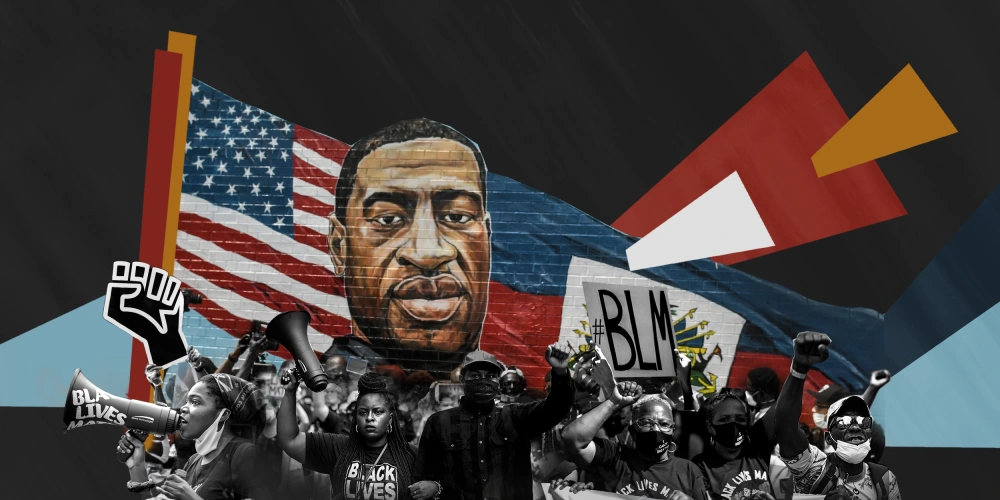
The United States is confronting a disturbing reality: the criminal legal system has become one of the most consequential forces determining who survives long enough to grow old. New evidence shows that the greatest threats to Black Americans’ life expectancy are not solely medical, but structural. Where policing, incarceration, and environmental injustice converge, premature death before age 65 is accelerating, creating a contradiction in a nation that promises security in old age through programs like Medicare. Many Black adults do not live long enough to receive it, and the areas with the highest exposure to incarceration and aggressive policing are now experiencing the sharpest rise in early mortality.
A recent study published in November 2025 reports a disturbing rise in premature death in the United States, especially among Black adults. The researchers analyzed mortality for adults aged 18 to 64 and found a significant increase in fatalities over the last decade, with Black Americans experiencing the sharpest rise. Because Medicare eligibility begins at age 65, more Black adults are dying before they ever receive the benefits they paid into throughout their working lives. This places a major issue into clearer focus: premature mortality among Black Americans is not only a public-health crisis but a justice-system crisis. The factors driving early death are intertwined with policing, incarceration, and the structural conditions shaped by the American criminal legal system.
Mortality research increasingly identifies incarceration, police violence, and carceral-adjacent environments, such as proximity to toxic sites and poor infrastructure, as determinants of population health. Individual histories of incarceration and the broader incarceration rate of one’s county are predictors of all-cause mortality, including overdose and cardiovascular disease. There is an elevated risk of death within the first two weeks after release, 12.7 times higher than that of the general population. This spike occurs because people often leave custody without stable housing, consistent medical care, or access to needed medications. Reduced drug tolerance after incarceration makes overdosing especially likely. Because Black Americans are disproportionately exposed to arrest, pretrial detention, sentencing, and post-release supervision, these mortality risks fall unevenly across racial lines.
When the justice system determines who is more likely to be incarcerated, and incarceration itself raises the risk of premature death, the criminal legal system effectively becomes a mechanism shaping which populations live and which do not. This demonstrates the theory of necropolitics, which suggests that states exercise power not only by governing life but also by structuring exposure to death. Applying this framework makes clear that contemporary U.S. punishment and policing practices function as a form of necropolitical governance: they allocate vulnerability, shorten life expectancies, and concentrate premature mortality within specific racial groups.
Police violence also contributes substantially to these disparities. There is substantial under-reporting of fatal police violence, while Black Americans suffer a significantly higher mortality rate compared to White Americans across nearly four decades. Recent investigations into medical examiner record-keeping have demonstrated how official statistics can obscure the actual health burden imposed by the justice system. For example, in Maryland, deaths in police custody were reclassified as homicides. When the state fails to classify deaths accurately, it becomes harder to understand the scale of premature mortality affecting Black communities. The result is both a public-health blind spot and a democratic accountability problem.
Beyond the immediate risks of lethal force or death in custody, the justice system shapes health through chronic-disease pathways. Incarceration is associated with elevated rates of hypertension, diabetes, kidney disease, and cardiovascular conditions. The Journal of the American Heart Association writes that cardiovascular disease is a leading cause of death among incarcerated individuals, with persistent racial disparities in these outcomes. For Black adults who encounter the carceral system at higher rates, the accumulation of untreated or poorly managed chronic disease increases the likelihood of early death long before the age of 65.
Similarly, individuals with an incarceration history have reduced access to preventive care and delayed treatment, compounding long-term health risks. This occurs because many lose health insurance during custody, face barriers to re-enrollment upon release, and return to communities with limited medical resources or provider discrimination. These findings reinforce the notion that incarceration operates as a negative health intervention, often accelerating biological aging and heightening disease severity.
The effects of incarceration extend beyond individuals. Research in the American Journal of Public Health and Demography shows that countries with higher jail churn, the rapid cycling of people in and out of local jails, experience higher mortality rates among individuals who were never incarcerated, suggesting community-level spillovers. These spillovers stem from disrupted family structures, economic instability, reduced social cohesion, and the circulation of infectious disease, all of which disproportionately affect Black neighborhoods. Because Black communities are policed and incarcerated at higher rates, the community-level consequences of mass incarceration further deepen racial disparities in premature death.
These patterns unfold amid shifting federal oversight of the criminal legal system. In May 2025, the U.S. Department of Justice announced that it would no longer pursue specific consent-decree negotiations in several major cities. Consent decrees are legally binding court agreements used to reform police departments found to have unconstitutional practices. These practices can include excessive use of force, discriminatory traffic stops, unlawful arrests, or patterns of racial profiling. This policy shift affects ongoing federal oversight efforts in places such as Minneapolis and Louisville.
Although local governments pledged to continue reforms, the scope of these commitments varies. Some jurisdictions promised to revise use-of-force policies, expand de-escalation training, or strengthen civilian complaint systems. Even with these efforts, the rollback of federal oversight signals a retreat from one of the primary mechanisms historically used to reduce racially discriminatory or dangerous police behavior. The Department of Justice also ended an environmental-justice agreement in Lowndes County, Alabama, a predominantly Black rural community suffering from sewage failures and associated health hazards. Because environmental conditions, policing practices, and incarceration interact to shape community health, changes in federal oversight can indirectly influence premature mortality as well. Decisions in the justice system, whether in policing, probation, jail management, or environmental enforcement, reshape the context in which health disparities unfold.
Taken together, current evidence shows that the rise in premature death among Black Americans is not simply a clinical phenomenon but the result of interacting structural systems. Policing practices determine arrest rates; courts determine who enters jail and prison; incarceration affects both acute and chronic health conditions; and reentry generates some of the most dangerous periods in an individual’s life. When combined with under-reported deaths in custody, inconsistent federal oversight, and longstanding racialized exposure to environmental hazards, the justice system plays a central role in determining who survives and who does not. This creates a profound equity crisis: a society cannot claim to value life or justice if the very systems meant to uphold public safety systematically shorten the lives of entire racial groups.
The findings of the 2025 JAMA Health Forum study highlight a pressing need for policies that intervene earlier in the life course, before age 65. This includes investments in preventive health care for communities disproportionately affected by incarceration, reforms to reduce unnecessary pretrial detention, reentry health programs that address the lethal early post-release window, and robust transparency requirements for deaths in custody. It also requires integrating incarceration rates into public-health surveillance, recognizing them as social determinants of health on par with housing, income, and education. Without addressing the criminal legal system’s role in shaping life expectancy, efforts to reduce premature mortality among Black Americans will remain incomplete.
Ultimately, the intersection of current public-health data and the realities of the justice system makes clear that premature death among Black adults is not merely a tragedy but a predictable outcome of structural inequality. When a society allows its justice system to produce avoidable death through incarceration, policing, and inadequate oversight, it undermines the foundational promise of health security in old age. Ensuring that Black Americans live long enough to benefit from Medicare requires more than health-care reform; it requires confronting the justice system as a determinant of life itself. That confrontation must take the form of structural change: independent federal oversight of police departments, meaningful decarceration initiatives for people with serious health needs, mandatory reporting of deaths in custody, and reentry systems that provide immediate access to healthcare during the most dangerous weeks after release. Without these reforms, premature death will not remain an irregularity but an expected byproduct of the system we have chosen to maintain.monumental-impact-george-floyds-death-black-america-rcna1021