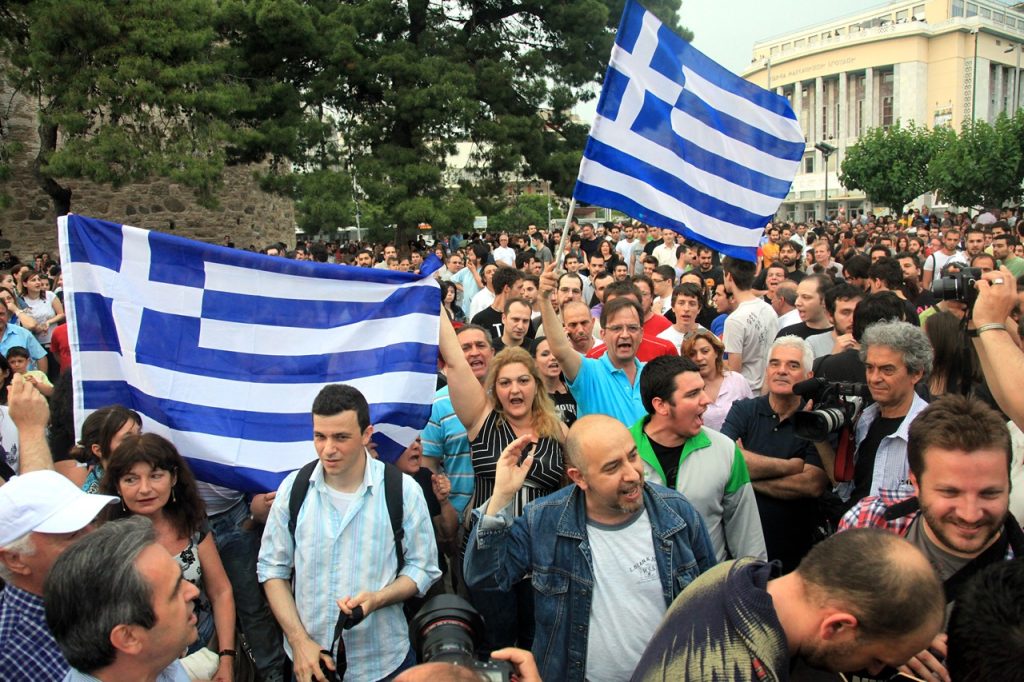
Seventeen years ago, the 2008 Debt Crisis brought Greece to its knees, pushing unemployment above 27 percent and shrinking the economy by a quarter. With three relief packages totaling 289 billion euros from the International Monetary Fund (IMF) and European Union (EU), the country faced a difficult road to recovery. Finally, Greece has begun to claw itself out. This year, Greece repaid 5.3 billion dollars of its debt six years ahead of schedule and is expected to save itself 1.6 billion dollars of interest by 2041. Additionally, it was one of just six European countries to end 2025 without a financial deficit.
However, while Greece’s debt payments are surpassing expectations, its people continue to feel the effects of a broken economy. The cost of living in major cities has skyrocketed, yet income has remained stagnant. Debt repayment is a positive development, yet it has exacerbated one of the Greek economy’s biggest weaknesses: state mismanagement of funds and a lack of industrial ownership.
The Tax Curse
Greece’s relationship with taxation has been notoriously tumultuous. Inefficient taxation and rampant tax evasion were two of the main factors that led to Greece’s debt crisis. From 2009 to 2024, the Greek government lost about 81 billion euros in potential revenue from uncollected value-added taxes (VAT). Despite tax reform being a key component of its bailouts, 2024 was the first year in which tax evasion was addressed through the expansion of POS systems, auditing overhauls, and collection mechanism changes. These measures have been effective, with Greece’s VAT gap shrinking from 11 percent to 9 percent from 2023 to 2024, but have come far too late.
Taxation is not the only area of financial mismanagement within the Greek government. Costs of government initiatives and public works in Greece run higher than they otherwise would because corruption inflates them. For example, an EU audit in 2018 found that three newly built Greek highways cost taxpayers 1.2 billion dollars more than they should have. This remains true even though the minimum wage in Greece is significantly lower than the European average, lowering Greece’s cost of labor. Bribery in the public procurement sector runs rampant in Greece, leading to higher costs of government contracts.
Interestingly, Greece’s fragile financial state has not hindered politicians from taking bribes. In the midst the 2010 debt crisis, transportation minister Tasos Mantelis received a three year suspension for receiving 230,000 euros in bribes from German automation company Siemens.
This corruption is not limited to just infrastructure. The European Public Prosecutor’s (EPPO) office is currently investigating the Greek Payment and Control Agency for Guidance and Guarantee Community Aids (OPEKEPE) for fraud and the misappropriation of 3.82 billion euros of agriculture subsidies from the EU. The EPPO alleges that individuals who misrepresented themselves as farmers obtained farming subsidies from the national reserve, backed by EU funding.
Widespread corruption means that the Greek government pays more for services, which restrains its fragile economy, and already-struggling Greeks are forced to watch as their taxes get squandered. A government that is diminishing its earning potential and mishandling the few funds it does have cannot expect economic prosperity.
The Great Sellout
To recover from its debt crisis, the Greek government decided to privatize large public entities. In doing so, these entities were sold to non-Greek companies. In 2016, two thirds of the stake of Piraeus, the largest port in Greece and one of the largest in Europe, was sold to Chinese shipping company Cosco. While the port has been modernized under Chinese leadership, this presents a larger issue.
Piraeus now prioritizes Chinese shipments and products, and consequently, Greece is dependent on China to maintain the commerce it hopes to oversee. Greece has little control over how the port is run, and even worse, takes in significantly less of the profits that the port makes. Foreign investment is usually a positive for struggling economies, but foreign ownership means reduced control over profits and a stifled potential for long-term growth.
Piraeus is not the only Greek entity sold off to a foreign conglomerate. 14 of the majority shares of Greece’s airports, including its two largest in Athens and Thessaloniki, were sold to German company Fraport in 2015. While Fraport agreed to improve airport infrastructure, like the case of Piraeus, this comes at a cost. Payment for the Greek airport system was 1.23 billion dollars for 40 years of ownership, but it is only expected to make the Greek state 8 billion dollars over these 40 years.
Additionally, the already financially burdened Greek government has been expected to pick up the costs of any contractual penalties of Fraport’s efforts to expand and improve the airport. This meant pay compensation for termination of leases and employment contracts, compensation for workplace accidents, and compensation for contract extension fees when projects were delayed.
Large profits that had the potential to be invested back into the Greek economy are flowing outside the country. For a country that has historically lacked export power, ownership of entities that produce large profits is especially important.
Privatization and foreign investment are not inherently wrong, especially when they contribute to infrastructure improvement. However, the extent to which Greece has relied on foreign investment to dig itself out of crisis has set it up for long-term difficulties. State ownership of large entities means that the state sees direct profits from them.
The Tourism Trap
In an attempt to create industry post-debt crisis, the Greek government leaned into tourism, simplifying its visa process, upgrading hotels throughout the country, and advertising its islands more than it ever had. These were successful measures, and the annual tourist rate per year in Greece grew from about 15 million to about 41 million. Tourism now makes up for 25 percent of its GDP, a full nine percentage points higher than 2009. However, while tourism undoubtedly created jobs for Greeks in a time of crisis, they were seasonal and low paying. The jobs that tourism has created do not outweigh its downsides for average Greeks.
In 2013, Greece introduced the Golden Visa. This granted a five year residency permit to anyone who spent over 250,000 euros on property. While this program has brought over 5.5 billion euros into the Greek economy, it also has had detrimental consequences. Instead of living in the properties that they had purchased, foreign investors have repurposed them into rentals, meaning the rental income flows outside the country.
As tourism grew, so did the amount of homes that began to turn into short-term rentals, namely Airbnbs. Landlords quickly realized that they could make larger profits from turning their properties into short-term rentals than they could renting them to Greek residents. As houses have been taken out of circulation to become Airbnbs, supply for long-term rentals has drained, raising their costs. The cost of buying a home has also steeply increased, as foreign investors have become willing to pay more than any average Greek ever could.
This problem has become especially bad in Athens, where many of the apartments in the city center sit vacant for most of the year as lifelong residents are forced to move farther and farther away from the homes that have been in their families for generations. Nearly one in three Greeks pay over 40 percent of their incomes towards rent. This number will continue to grow as income remains lower than it was before the crisis, all while housing costs continue to rise. Home ownership has declined by twelve percent, as the cost of owning a home has become too high for average Greeks.
Amidst this chaos, the Greek government has taken measures to reverse the damage. In 2024, it prohibited new Golden Visa applicants from using their properties as vacation rentals unless they spent 500,000 euros or more on the property and introduced initiatives to build middle-income housing on abandoned military bases in cities Athens, Thessaloniki, and Patras. This is certainly a start, but much of the damage has already been done. The Greek housing market has already been sold off, and cannot simply be bought back.
The Path Forward
Debt repayment has come at the cost of an affordable country for Greeks. While it might seem as though foreign incursion was necessary to dig the country out of debt, this is a misconception. The Greek government has put elite investors over average people repeatedly, and mismanaged the few funds it does have. While ineffective taxation is what caused Greece’s debt in the first place, adequately managing corruption might have meant that Greek entities did not have to be sold to the extent that they were.
Seeing such a grim future for their country has led to the mass exodus of educated, young Greeks leaving the country. Additionally, Greece faces a rapidly aging population and plummeting fertility rate, further suppressing Greece’s future economic and earning potential. While Greece has taken initiatives to prevent these issues, such as subsidies for educated people to move to Greece or tax incentives for families with children, a permanent solution cannot be in effect until young Greeks feel that they have the earning potential to survive the cost of living.
This, however, cannot happen until Greeks have at least some ownership of their country. Greece needs to impose stricter regulations on foreign-owned entities operating within its borders. This means renegotiating existing contracts where possible to ensure a larger share of profits remain in Greece, continuing to implement windfall taxes on extraordinary profits from privatized assets, and requiring foreign operators to reinvest a percentage of earnings into Greek businesses and infrastructure.
The Greek government must also implement aggressive caps on short-term rentals, such as limiting each property owner to a set number of Airbnb listings and requiring primary Greek residency for owners. Athens and other major cities should also adopt rent control measures tied to local median incomes and continue to expand social housing programs.
None of these solutions matter without addressing corruption head-on. Greece needs an independent anti-corruption agency with real enforcement power. Transparency in public procurement must become mandatory with all contracts and bids publicly accessible online. Whistleblower protections should be strengthened, and convicted officials should face serious penalties that actually deter future misconduct.
Only when Greeks trust that their taxes are being used effectively will the social contract necessary for economic recovery be restored. The path forward requires Greece to prioritize its people over its creditors for the first time in over a decade. Debt repayment means nothing if it comes at the cost of a country that Greeks can no longer afford to live in.